
By Carlos Banda
FINANCIAL knowledge needs to be pushed to the common people if inclusiveness and service delivery sustainability are to be realized in the financial sector value chain, a top official has declared.
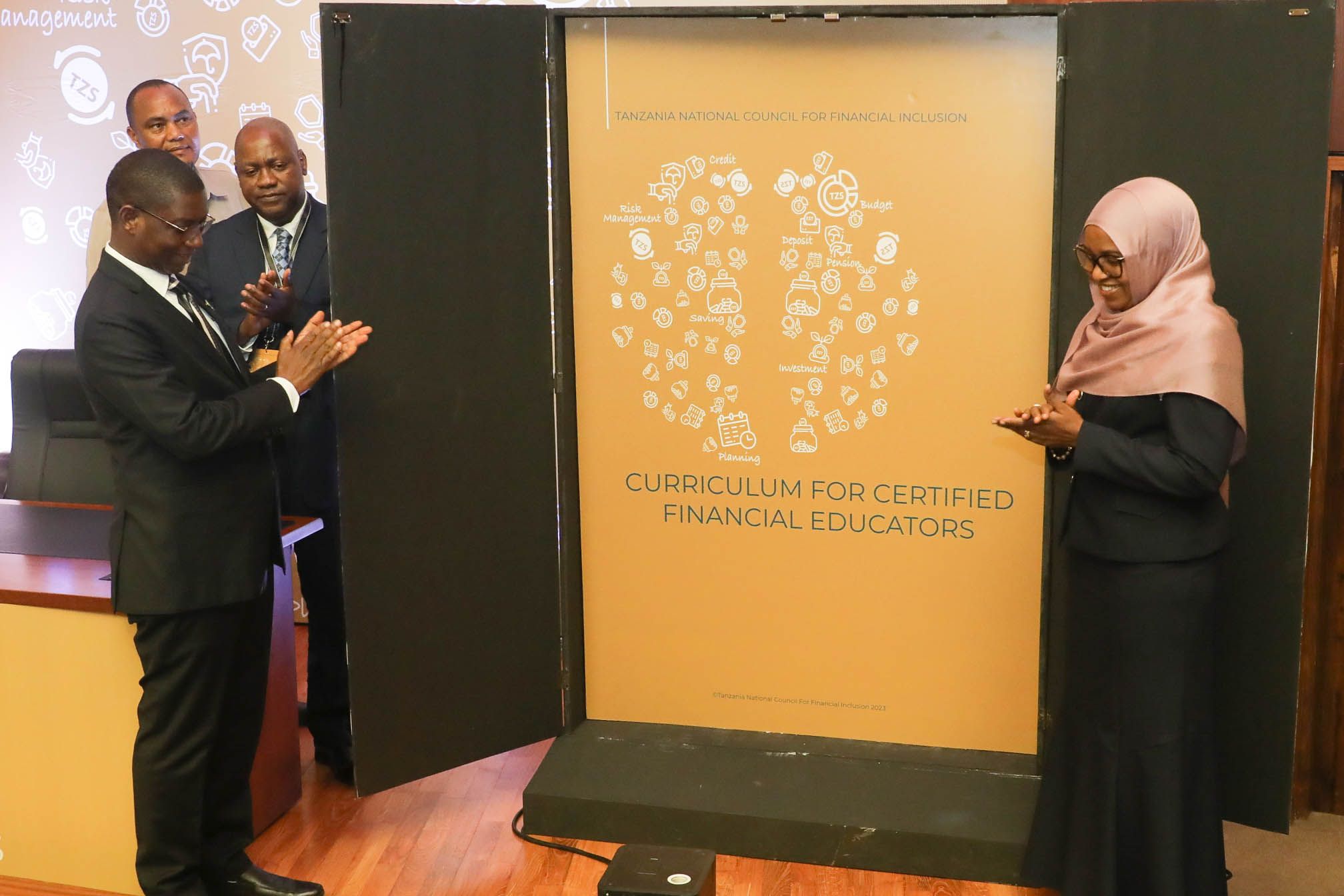
Emmanuel Tutuba, governor of the Bank of Tanzania (BoT) made this observation in Dar es Salaam yesterday at the launch of the curriculum for certified financial educators, grooming finance experts from financial institutions to share the knowledge with financial service consumers at the low end.
“The new curriculum targets at addressing the challenges arising from inefficient financial literacy countrywide, as financial literacy educators will be put to competency modules to spread the knowledge to people,” he said.
The modules cover financial numeracy skills, financial ecosystem, money management, financial obligation and personal financial protection, he stated. The targeted groups are financial regulators, corporate financial outreach officials, government entities, parastatal institutions and non-governmental organizations involved in delivering financial education, he said.
Urging for inclusive implementation of the curriculum, he said it was prepared in an inclusive manner, thus its implementation phase has to be inclusive as well, he said.
The government hopes to see all groups of the society benefiting from the knowledge embedded in the curriculum, he said, challenging higher learning institutions to effectively engage stakeholders.
“Sustainable initiatives that can withstand challenges during implantation are the ones that reap benefits to the public,” he said, underlining expectations that financial literacy will be long lasting. People in the informal sector need to be reached out and empowered with this knowledge, he specified. Beng’i Issa, the National Economic Empowerment Council (NEEC) executive secretary, commended the initiative towards boosting financial literacy countrywide.
It will help women often exposed to challenges in doing business as most of them have inadequate financial knowledge, she said, affirming it is a pillar in pursuing the public economic empowerment policy.
Finance and investment are crucial pillars in individual and national economic development, she said, citing key objectives in empowering people as access to finance and having control over their income like having a savings account. Without savings no plans are possible, this a savings account is a milestone, she said, asserting that spreading the curriculum will help address challenges facing budding entrepreneurs all over the country.
She said many women meet with challenges, delve into entrepreneurship where they make up 54 percent of micro-economic units and small businesses as a whole.
“Many of them wish to expand their capital but they fail to do so because they do not have the right financial understanding,” she said, pointing out that one might see women accessing loans from microfinance institutions “but they fail to understand what it means to have a loan.”
Someone may take a loan and will be required to pay it back with an interest of three percent. However, due to financially illiteracy they cannot really understand the burden that comes with the loan, while the problem is also evident in the formal sector, as even educated people struggle with handling money and budgeting, she remarked.
Prof Andrew Mbwambo, Iringa University deputy vice chancellor, said that if the curriculum is properly taken up, the public will have a reliable source of knowledge with clear content.
Financial interaction will be more articulate, making the public adequately knowledgeable about what financial acts involve, clearly evaluating what can be properly done and in what way. /ends /jz/sm


 UN House182,